
Table of Contents
Introduction
This infographic explains the Types of Deep Learning Models and their applications in science, technology, and daily life, using simple language and examples. Deep Learning is a subfield of Machine Learning.
ఈ ఇన్ఫోగ్రాఫిక్, డీప్ లెర్నింగ్ మోడల్స్ రకాలను మరియు సైన్స్, టెక్నాలజీ, మరియు దైనందిన జీవితంలో వాటి అనువర్తనాలను, సరళమైన భాష మరియు ఉదాహరణలను ఉపయోగించి వివరిస్తుంది. డీప్ లెర్నింగ్ అనేది మెషిన్ లెర్నింగ్ యొక్క ఒక ఉపవిభాగం.
AI infographics are visually engaging graphics created with the help of different graphics tools that present information in a clear and simplified way. In learning, AI infographics help students, learners, and competitive exams aspirants understand complex topics quickly by combining text, images, and data visualization. They improve memory retention, make concepts and topics more interactive, and save time for teachers and educators in content creation. Overall, AI infographics make learning more attractive, efficient, and easy to understand for learners of all levels.
AI ఇన్ఫోగ్రాఫిక్స్ అనేవి వివిధ గ్రాఫిక్స్ సాధనాల సహాయంతో సృష్టించబడిన, దృశ్యపరంగా ఆకట్టుకునే గ్రాఫిక్స్. ఇవి సమాచారాన్ని స్పష్టంగా మరియు సరళంగా అందిస్తాయి. అభ్యసనంలో, AI ఇన్ఫోగ్రాఫిక్స్ అనేవి టెక్స్ట్, చిత్రాలు, మరియు డేటా విజువలైజేషన్ను కలపడం ద్వారా విద్యార్థులు, అభ్యాసకులు, మరియు పోటీ పరీక్షల అభ్యర్థులు సంక్లిష్టమైన అంశాలను త్వరగా అర్థం చేసుకోవడానికి సహాయపడతాయి. ఇవి జ్ఞాపకశక్తిని మెరుగుపరుస్తాయి, భావనలను మరియు అంశాలను మరింత ఇంటరాక్టివ్గా చేస్తాయి, మరియు కంటెంట్ సృష్టిలో ఉపాధ్యాయులు మరియు అధ్యాపకులకు సమయాన్ని ఆదా చేస్తాయి. మొత్తంగా, AI ఇన్ఫోగ్రాఫిక్స్ అన్ని స్థాయిల అభ్యాసకులకు నేర్చుకోవడాన్ని మరింత ఆకర్షణీయంగా, సమర్థవంతంగా మరియు సులభంగా అర్థమయ్యేలా చేస్తాయి.
How to Use this Infographic?
First, look at the entire infographic without reading every detail. This helps your brain understand what topic you are learning before diving into details.
ముందుగా, ప్రతి వివరాన్ని చదవకుండా మొత్తం ఇన్ఫోగ్రాఫిక్ను చూడండి. ఇది వివరాలను తెలుసుకునే ముందు మీరు ఏ అంశం గురించి నేర్చుకుంటున్నారో మీ మెదడు అర్థం చేసుకోవడానికి సహాయపడుతుంది.
Now, read all the infographic sections carefully and understand the different types of deep learning models, key uses, and important applications in the real world.
ఇప్పుడు, ఇన్ఫోగ్రాఫిక్లోని అన్ని విభాగాలను జాగ్రత్తగా చదివి, వివిధ రకాల డీప్ లెర్నింగ్ మోడల్స్, వాటి ముఖ్య ఉపయోగాలు మరియు నిజ ప్రపంచంలోని ముఖ్యమైన అనువర్తనాలను అర్థం చేసుకోండి.
AI infographics are perfect revision tools. Review them before exams, classroom lectures, writing articles, interviews, and presentations. Just 5 minutes of revision can refresh an entire topic. Use AI infographics for understanding and revision, not memorization alone. When visuals, examples, and practice come together, reading about AI becomes easy and enjoyable.
AI ఇన్ఫోగ్రాఫిక్స్ అనేవి పునశ్చరణకు సరైన సాధనాలు. పరీక్షలకు, తరగతి గది ఉపన్యాసాలకు, వ్యాసాలు రాయడానికి, ఇంటర్వ్యూలకు మరియు ప్రజెంటేషన్లకు ముందు వాటిని సమీక్షించండి. కేవలం 5 నిమిషాల పునశ్చరణ ఒక మొత్తం అంశాన్ని పునశ్చరణ చేయగలదు. కేవలం కంఠస్తం చేయడం కాకుండా, అర్థం చేసుకోవడానికి మరియు పునశ్చరణ కోసం AI ఇన్ఫోగ్రాఫిక్స్ను ఉపయోగించండి. దృశ్యాలు, ఉదాహరణలు మరియు అభ్యాసం కలిసినప్పుడు, AI గురించి చదవడం సులభంగా మరియు ఆనందదాయకంగా మారుతుంది.
Types of Deep Learning Models
Deep Learning is a subfield of Machine Learning. It utilizes multi-layered artificial neural networks to learn from vast amounts of data. The deep learning models consist of neural networks of 3+ layers that mimic the brain. Deep Learning models are self-directed models. They identify patterns by themselves using a hierarchy of layers.
డీప్ లెర్నింగ్ అనేది మెషిన్ లెర్నింగ్ యొక్క ఒక ఉపవిభాగం. ఇది విస్తారమైన డేటా నుండి నేర్చుకోవడానికి బహుళ-పొరల కృత్రిమ న్యూరల్ నెట్వర్క్లను ఉపయోగిస్తుంది. ఈ న్యూరల్ నెట్వర్క్లు మానవ మెదడును పోలిన 3 లేదా అంతకంటే ఎక్కువ పొరలను కలిగి ఉంటాయి. డీప్ లెర్నింగ్ నమూనాలు స్వీయ-నిర్దేశిత నమూనాలు. అవి పొరల సోపానక్రమాన్ని ఉపయోగించి, వాటంతట అవే నమూనాలను గుర్తిస్తాయి.
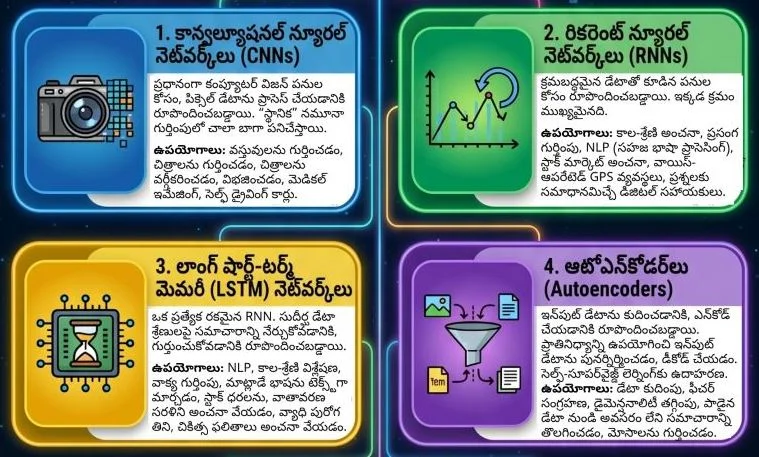
1. Convolutional Neural Networks (CNNs)
- This is one of the well-known Deep Learning Models.
- Primarily associated with computer vision tasks
- Designed to process pixel data
- Excel at “local” pattern recognition
- Applications: Object detection, Image recognition, Image classification, Image segmentation, Medical imaging, Self-driving cars.
కన్వల్యూషనల్ న్యూరల్ నెట్వర్క్లు (CNNలు)
ప్రధానంగా కంప్యూటర్ విజన్ పనుల కోసం, పిక్సెల్ డేటాను ప్రాసెస్ చేయడానికి రూపొందించబడ్డాయి,
“స్థానిక” నమూనా గుర్తింపులో చాలా బాగా పనిచేస్తాయి.
ఉపయోగాలు: వస్తువులను గుర్తించడం, చిత్రాలను గుర్తించడం, చిత్రాలను వర్గీకరించడం, చిత్రాలను విభజించడం, మెడికల్ ఇమేజింగ్, సెల్ఫ్ డ్రైవింగ్ కార్లు
2. Recurrent Neural Networks (RNNs)
- This is one of the important Deep Learning Models.
- Used for tasks involving sequential data where the order matters
- Applications: Time-series forecasting, Speech recognition, Natural Language Processing (NLP), Stock market prediction, Voice-operated GPS systems, Question-answering digital assistants
రికరెంట్ న్యూరల్ నెట్వర్క్లు (RNNలు)
క్రమబద్ధమైన డేటాతో కూడిన పనుల కోసం రూపొందించబడ్డాయి, ఇక్కడ క్రమం ముఖ్యమైనది.
ఉపయోగాలు: కాల-శ్రేణి అంచనా, ప్రసంగ గుర్తింపు, NLP (సహజ భాషా ప్రాసెసింగ్), స్టాక్ మార్కెట్ అంచనా, వాయిస్-ఆపరేటెడ్ GPS వ్యవస్థలు, ప్రశ్నలకు సమాధానమిచ్చే డిజిటల్ సహాయకులు
3. Long Short-term Memory (LSTM) Networks
- This is one of the popular Deep Learning Models.
- This is a special type of RNN
- Designed to learn and remember information over long sequences of data
- Applications: NLP, Time series analysis, Speech recognition, Transcribe spoken language into text, Predict stock prices, Predict weather patterns, Predict disease progression, and treatment outcomes
లాంగ్ షార్ట్-టర్మ్ మెమరీ (LSTM) నెట్వర్క్లు
ఒక ప్రత్యేక రకమైన RNN, సుదీర్ఘ డేటా శ్రేణులపై సమాచారాన్ని నేర్చుకోవడానికి మరియు గుర్తుంచుకోవడానికి రూపొందించబడ్డాయి.
ఉపయోగాలు: NLP, కాల శ్రేణి విశ్లేషణ, వాక్య గుర్తింపు, మాట్లాడే భాషను టెక్స్ట్గా మార్చడం, స్టాక్ ధరలను, వాతావరణ సరళిని అంచనా వేయడం, వ్యాధి పురోగతిని మరియు చికిత్స ఫలితాలను అంచనా వేయడం
4. Autoencoders
- This is one of the well-known Deep Learning Models.
- Designed to compress/encode input data
- Reconstruct/decode input data using compressed representation
- Example of self-supervised learning
- Applications: Data compression, Dimensionality reduction, Feature extraction, Denoising corrupted data, Fraud detection
ఆటోఎన్కోడర్లు
ఇన్పుట్ డేటాను కుదించడానికి, ఎన్కోడ్ చేయడానికి రూపొందించబడ్డాయి.
కుదించబడిన ప్రాతినిధ్యాన్ని ఉపయోగించి ఇన్పుట్ డేటాను పునర్నిర్మించడం, డీకోడ్ చేయడం.
సెల్ఫ్-సూపర్వైజ్డ్ లెర్నింగ్కు ఉదాహరణ.
ఉపయోగాలు: డేటా కుదింపు, డైమెన్షనాలిటీ తగ్గింపు, ఫీచర్ సంగ్రహణ, పాడైన డేటా నుండి అవసరం లేని సమాచారాన్ని తొలగించడం, మోసాలను గుర్తించడం
5. Transformer Models
- This is one of the important Deep Learning Models.
- Analyze the input data simultaneously
- Operate using self-attention mechanism
- Uses attention layers and feedforward layers
- Architecture behind ChatGPT and Gemini
- Applications: Text generation, Real-time translation, Chatbots, Sentiment analysis, Sequential data processing, Protein folding in biology
ట్రాన్స్ఫార్మర్ మోడల్స్
ఇన్పుట్ డేటాను ఏకకాలంలో విశ్లేషిస్తాయి, సెల్ఫ్-అటెన్షన్ మెకానిజంతో పనిచేస్తాయి.
అటెన్షన్ లేయర్లు, ఫీడ్ఫార్వర్డ్ లేయర్లను ఉపయోగిస్తాయి. ChatGPT మరియు Gemini వెనుక ఉన్న ఆర్కిటెక్చర్.
ఉపయోగాలు: టెక్స్ట్ జనరేషన్, రియల్-టైమ్ అనువాదం, చాట్బాట్లు, సెంటిమెంట్ విశ్లేషణ, సీక్వెన్షియల్ డేటా ప్రాసెసింగ్, జీవశాస్త్రంలో ప్రోటీన్ ఫోల్డింగ్
6. Generative Adversarial Networks (GANs)
- This is one of the popular Deep Learning Models.
- Designed to create new data resembling the original training data
- Determines if a given image is real or fake
- Consist of two neural networks (Generator & Discriminator)
- Generator tries to create fake data
- Discriminator tries to catch it
- Applications: Creating ‘deepfakes’, Generating photorealistic faces, Enhancing low-resolution images
జెనరేటివ్ అడ్వర్సేరియల్ నెట్వర్క్లు (GANలు)
అసలు ట్రైనింగ్ డేటాను పోలిన కొత్త డేటాను సృష్టించడానికి రూపొందించబడ్డాయి, ఇచ్చిన చిత్రం నిజమైనదా లేదా నకిలీదా నిర్ధారిస్తాయి,
రెండు న్యూరల్ నెట్వర్క్లను (జెనరేటర్ & డిస్క్రిమినేటర్) కలిగి ఉంటాయి. జెనరేటర్ నకిలీ డేటాను సృష్టించడానికి ప్రయత్నిస్తుంది,
డిస్క్రిమినేటర్ దానిని పట్టుకోవడానికి ప్రయత్నిస్తుంది
ఉపయోగాలు: ‘డీప్ఫేక్’ లను సృష్టించడం, నిజమైన చిత్రాలను కనుగొనడం, ఫోటోరియలిస్టిక్ ముఖాలను రూపొందించడం, తక్కువ రిజల్యూషన్ చిత్రాలను మెరుగుపరచడం
7. Other Models
The following are other important Deep Learning Models.
A) Mamba Models
-Designed to work with sequential data
-Selectively prioritize past information based on its relevance at given moment
-Uses less memory-intensive algorithm
B) Diffusion Models
-Prominent neural network architectures in generative AI
-Offer training stability and output fidelity
-Applications: Image generation, Generating text, Generating video & audio data
C) Graph Neural Networks (GNNs)
-Designed for tasks that require modeling more complex relationships
between different entities
ఇతర నమూనాలు
A) మాంబా మోడల్స్: క్రమానుగత డేటాతో పనిచేయడానికి రూపొందించబడ్డాయి,
ఇచ్చిన క్షణంలో దాని ప్రాసంగికత ఆధారంగా గత సమాచారానికి ఎంపికగా ప్రాధాన్యత ఇస్తాయి.
ఇచ్చిన సమయంలో దాని ఔచిత్యాన్ని బట్టి గత సమాచారాన్ని ఎంపిక చేసి ప్రాధాన్యత ఇస్తాయి.
తక్కువ మెమరీ-ఇంటెన్సివ్ అల్గోరిథంను ఉపయోగిస్తాయి.
B) డిఫ్యూజన్ మోడల్స్: జెనరేటివ్ AIలో ప్రముఖ న్యూరల్ నెట్వర్క్ ఆర్కిటెక్చర్లు,
శిక్షణ స్థిరత్వం మరియు అవుట్పుట్ విశ్వసనీయతను అందిస్తాయి.
ఉపయోగాలు: ఇమేజ్ జనరేషన్, టెక్స్ట్ జనరేట్ చేయడం, వీడియో & ఆడియో డేటాను జనరేట్ చేయడం.
C) గ్రాఫ్ న్యూరల్ నెట్వర్క్లు (GNN): విభిన్న విషయాల మధ్య మరింత సంక్లిష్టమైన సంబంధాలను మోడలింగ్ చేయాల్సిన పనుల కోసం రూపొందించబడ్డాయి.
Infographic – Types of Deep Learning Models

Additional Resources
More on AI: Important AI Concepts
Learn English Grammar: Simple Past Tense
Communication skills: Ways to Improve