
Table of Contents
English Grammar infographics present information on important grammar topics and concepts in a concise and visual format. They help learners quickly understand key points without reading lengthy articles.
ఇంగ్లీష్ వ్యాకరణ ఇన్ఫోగ్రాఫిక్స్ ముఖ్యమైన వ్యాకరణ అంశాలు మరియు భావనల గురించిన సమాచారాన్ని సంక్షిప్త మరియు దృశ్య రూపంలో అందిస్తాయి. ఇవి అభ్యాసకులు సుదీర్ఘమైన వ్యాసాలు చదవకుండానే కీలకమైన విషయాలను త్వరగా అర్థం చేసుకోవడానికి సహాయపడతాయి.
Learning active and passive voice gives learners the power to control the focus of their sentences and achieve fluency. This infographic helps you understand how you can convert and use different types of sentences in active and passive voice, all at a glace!
వివిధ రకాల వాక్యాలను కర్మణి ప్రయోగంలోకి (passive voice) ఎలా మారుస్తారో ఒక్క పేజీ లోనే అర్థం చేసుకోవడానికి ఈ ఇన్ఫోగ్రాఫిక్ మీకు సహాయపడుతుంది!
These infographics are especially useful for academic and competitive exam preparation, and for daily conversations, making learning both quick and effective.
ఈ ఇన్ఫోగ్రాఫిక్స్ ముఖ్యంగా విద్యాసంబంధ మరియు పోటీ పరీక్షల తయారీకి, అలాగే రోజువారీ సంభాషణలకు ఉపయోగపడతాయి. ఇవి అభ్యాసాన్ని వేగవంతంగా మరియు సమర్థవంతంగా చేస్తాయి.
How to Use this Infographic on Active and Passive Voice?
First, look at the entire infographic without reading every detail. This helps your brain understand what topic you are learning before diving into details. Now, read all the infographic sections carefully and understand how the different types of sentences are converted and used in active and passive voice.
మొదట, ప్రతి వివరమూ చదవకుండా మొత్తం ఇన్ఫోగ్రాఫిక్ను చూడండి. వివరాల్లోకి వెళ్లే ముందు మీరు ఏ అంశం నేర్చుకుంటున్నారో మీ మెదడుకు అర్థం చేసుకోవడానికి ఇది సహాయపడుతుంది. ఇప్పుడు, ఇన్ఫోగ్రాఫిక్లోని అన్ని విభాగాలను జాగ్రత్తగా చదివి, వివిధ రకాల వాక్యాలను కర్మణి ప్రయోగంలోకి (passive voice) ఎలా మారుస్తారో అర్థం చేసుకోండి.
English Grammar infographics are perfect revision tools. Review them before your exams, classroom lectures, when you are writing articles, and before giving office presentations. Just 5 minutes of revision can refresh an entire topic. Use English Grammar infographics for understanding and revision, not memorization alone. When visuals, examples, and practice come together, reading about English Grammar topics becomes easy and enjoyable.
ఇంగ్లీష్ వ్యాకరణ ఇన్ఫోగ్రాఫిక్స్ పునశ్చరణకు సరైన సాధనాలు. మీ పరీక్షలకు ముందు, తరగతి గది ఉపన్యాసాలకు ముందు, మీరు వ్యాసాలు రాసేటప్పుడు మరియు ఆఫీసులో ప్రజెంటేషన్లు ఇచ్చే ముందు వాటిని సమీక్షించండి. కేవలం 5 నిమిషాల పునశ్చరణ ఒక మొత్తం అంశాన్ని పునశ్చరణ చేయగలదు. ఇంగ్లీష్ వ్యాకరణ ఇన్ఫోగ్రాఫిక్స్ను కేవలం బట్టి పట్టడానికి కాకుండా, అర్థం చేసుకోవడానికి మరియు పునశ్చరణకు ఉపయోగించండి. దృశ్యాలు, ఉదాహరణలు మరియు అభ్యాసం కలిసినప్పుడు, ఇంగ్లీష్ వ్యాకరణ అంశాల గురించి చదవడం సులభంగా మరియు ఆనందదాయకంగా మారుతుంది.
If you want more examples, rules, and uses of active and passive voice, please read our blog post, Active and Passive Voice: A Comprehensive Guide.
Active and Passive Voice in Different Sentences
Now, read the sentences in infographic to understand how different types of sentences are used active and passive voice. Also, observe how the focus of the sentences changed as per the structure.
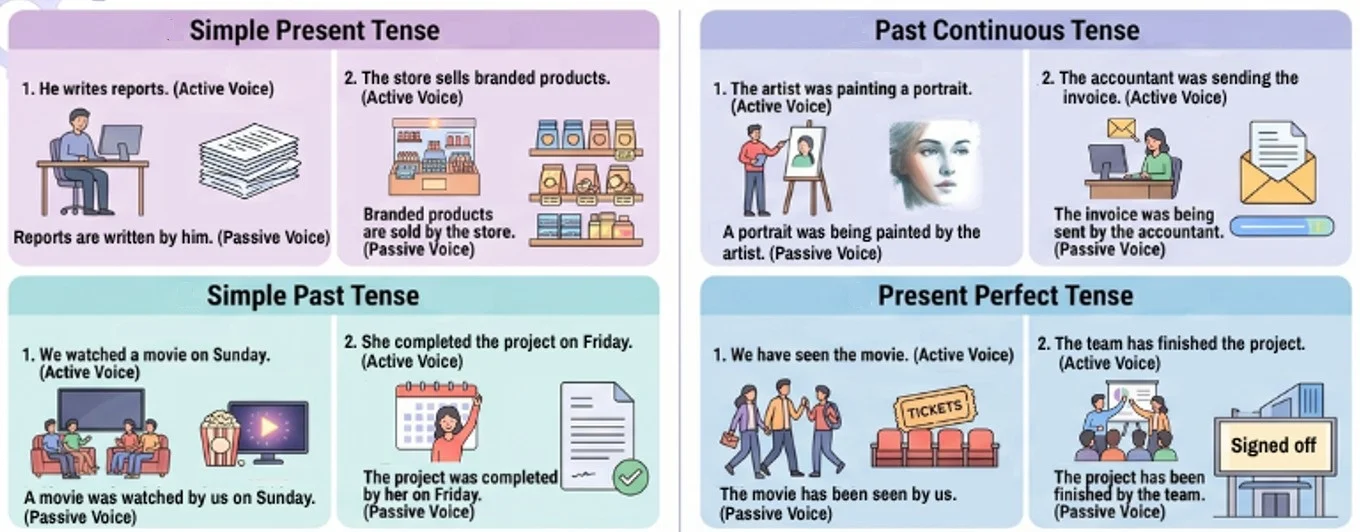
Sentences in Simple Present Tense (సాధారణ వర్తమాన కాలంలోని వాక్యాలు)
He writes reports. (Active Voice)
Reports are written by him. (Passive Voice)
The store sells branded products. (Active Voice)
Branded products are sold by the store. (Passive Voice)
Sentences in Simple Past Tense (సాధారణ భూతకాలంలోని వాక్యాలు)
We watched a movie on Sunday. (Active Voice)
A movie was watched by us on Sunday. (Passive Voice)
She completed the project on Friday. (Active Voice)
The project was completed by her on Friday. (Passive Voice)
Sentences in Simple Future Tense (సాధారణ భవిష్యత్ కాలంలోని వాక్యాలు)
The company will hire 50 employees. (Active Voice)
Fifty employees will be hired by the company. (Passive Voice)
We will launch a new product next month. (Active Voice)
A new product will be launched by us next month. (Passive Voice)
Sentences in Present Continuous Tense (ప్రస్తుతం కొనసాగుతున్న కాలంలోని వాక్యాలు)
My roommate is preparing the meal. (Active Voice)
The meal is being prepared by my roommate. (Passive Voice)
The company is conducting interviews. (Active Voice)
Interviews are being conducted by the company. (Passive Voice)
Sentences in Past Continuous Tense (గతంలో కొనసాగుతున్న కాలంలోని వాక్యాలు)
The artist was painting a portrait. (Active Voice)
A portrait was being painted by the artist. (Passive Voice)
The accountant was sending the invoice. (Active Voice)
The invoice was being sent by the accountant. (Passive Voice)
Sentences in Present Perfect Tense (ప్రస్తుత పరిపూర్ణ కాలంలోని వాక్యాలు)
The team has finished the project. (Active Voice)
The project has been finished by the team. (Passive Voice)
We have seen the movie. (Active Voice)
The movie has been seen by us. (Active Voice)
Sentences in Past Perfect Tense (గతంలో పరిపూర్ణ కాలంలోని వాక్యాలు)
He had spoken French. (Active Voice)
French had been spoken by him. (Passive Voice)
She had delivered the presentation. (Active Voice)
The presentation had been delivered by her. (Passive Voice)
Sentences in Future Perfect Tense (భవిష్యత్ పరిపూర్ణ కాలంలోని వాక్యాలు)
I will have spoken German by July. (Active Voice)
German will have been spoken by me by July. (Passive Voice)
The builder will have completed the house by December. (Active Voice)
The house will have been completed by the builder by December. (Passive Voice)
Sentences with Modal Verbs (మోడల్ క్రియలతో కూడిన వాక్యాలు)
She can speak four languages. (Active Voice)
Four languages can be spoken by her. (Passive Voice)
You must submit the application. (Active Voice)
The application must be submitted by you. (Passive Voice)
Questions (ప్రశ్నార్థక వాక్యాలు)
Yes / No Type Questions
Do you speak Spanish? (Active Voice)
Is Spanish spoken by you? (Passive Voice)
Did she write the email? (Active Voice)
Was the email written by her? (Passive Voice)
Wh- Type Questions
Where did you buy this phone? (Active Voice)
Where was this phone bought by you? (Passive Voice)
Who will teach the students? (Active Voice)
By whom will the students be taught? (Passive Voice)
Imperative Sentences (ఆదేశాలు, సలహాలు, ఆహ్వానాలకు సంబంధించిన వాక్యాలు)
Commands, Orders, Instructions
Stop talking! (Active Voice)
You are ordered to stop talking. (Passive Voice)
Send this email. (Active Voice)
You are asked to send this email. (Passive Voice)
Preheat the oven to 350 degrees. (Active Voice)
You are asked to preheat the oven to 350 degrees. (Passive Voice)
Advice
Take this medicine twice a day. (Active Voice)
You are advised to take this medicine twice a day. (Passive Voice)
Invitations
Come to my party! (Active Voice)
You are invited to come to my party. (Passive Voice)
We invite you to attend the conference on AI. (Active Voice)
You are invited to attend the conference on AI. (Passive Voice)
Warnings
Don’t turn off your computer! (Active Voice)
You are warned not to turn off your computer. (Passive Voice)
Sentences with Two Objects (రెండు కర్మలు ఉన్న వాక్యాలు)
She gave her friend a novel. (Active Voice) (‘novel’ is direct object; ‘her friend’ is indirect object)
A novel was given by her to her friend. (Passive Voice) (with direct object)
Her friend was given a novel by her. (Passive Voice) (with indirect object)
The manager gave the team clear instructions. (Active Voice)
Clear instructions were given by the manager to the team. (Passive Voice)
The team was given clear instructions by the manager. (Passive Voice)
If you understand the conversion rules of active and passive voice, it gives you control over your writing. Continue to focus on active and passive voice. Look at your recent emails, articles, blog posts, or essays. Learn from your mistakes.
Infographic on Active and Passive Voice

Please click on the image for a bigger view.
Additional Resources
For more grammar and communication tips, explore our other blog articles and infographics on:
4 thoughts on “Active and Passive Voice in 12 Different Sentences – Infographic”